 What is 3D Printing? The Ultimate Guide for Developers & Designers
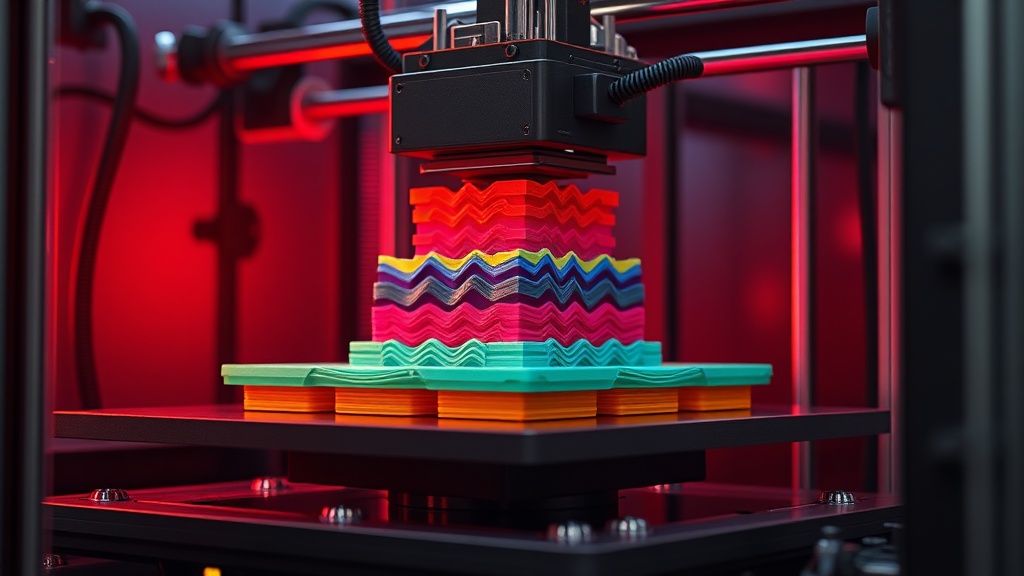
Caption: Featured image representing What is 3D Printing? The Ultimate Guide for Developers & Designers
Introduction: Unveiling the World of 3D Printing
 Introduction: Unveiling the World of 3D Printing
Caption: Visual representation of Introduction: Unveiling the World of 3D Printing
In an era defined by innovation and rapid technological advancement, 3D printing — or additive manufacturing — stands as a monumental paradigm shift, fundamentally transforming the landscape of design and manufacturing. Far from a niche technology, it has evolved into a powerful, accessible tool that empowers creators to transition from digital concepts to tangible objects with unprecedented speed and flexibility. For developers and designers, this revolution is particularly profound, offering a fertile ground for creativity, rapid iteration, and the realization of previously impossible designs.
This guide serves as your comprehensive entry point into the world of 3D printing, specifically tailored to illuminate its immense potential for those who build, sculpt, and innovate. We'll delve into how this technology is not just an alternative manufacturing method, but a catalyst for enhanced product development, personalized solutions, and a streamlined workflow.
Why 3D Printing is a Game-Changer for Developers & Designers
3D printing empowers you to overcome traditional manufacturing constraints, offering a suite of benefits that accelerate your projects and expand your creative horizons:
- Accelerated Rapid Prototyping: Drastically reduce the time and cost associated with developing and testing new products. Create multiple iterations of a design within hours or days, enabling swift feedback loops and continuous improvement for prototype manufacturing.
- Unleashed Design Freedom: Break free from the limitations of subtractive manufacturing. Design complex geometries, intricate internal structures, and highly customized parts that would be impossible or prohibitively expensive to produce with conventional methods.
- Customization and Personalization: Deliver bespoke solutions tailored to individual needs or small-batch production. From medical devices to consumer goods, custom 3d printing opens doors to highly personalized products.
- On-Demand Manufacturing: Produce parts only when needed, minimizing waste and storage costs. This is particularly advantageous for specialized components or low-volume production runs, accessible through various online 3d printing service providers.
- Material Versatility: Explore a wide range of materials, from durable PLA filament and PETG filament used in FDM printing to high-resolution resins for SLA printing, allowing you to select the perfect properties for your application.
The journey from a digital blueprint to a physical object often begins with an STL file printing. Modern platforms allow you to easily upload STL online to print my STL, simplifying the process of bringing your designs to life. Beyond traditional methods, the advent of an AI 3D model generator further democratizes design, enabling even complex models to be conceptualized with greater ease. Tools like Printora AI Studio exemplify this innovation, offering powerful capabilities for generating intricate designs effortlessly.
Whether you're exploring the burgeoning market of 3d printing in India or seeking a reliable global partner, the accessibility of an online 3d printing service through platforms like the Printora Marketplace, ensures that your vision can be transformed into reality, no matter your location or project scale. This guide will equip you with the knowledge to harness these capabilities, transforming the way you design, develop, and deliver.
What Exactly is 3D Printing? The Additive Manufacturing Revolution
 What Exactly is 3D Printing? The Additive Manufacturing Revolution
Caption: Visual representation of What Exactly is 3D Printing? The Additive Manufacturing Revolution
3D printing, scientifically known as Additive Manufacturing (AM), represents a paradigm shift in how physical objects are created. At its core, 3D printing is a revolutionary process that builds three-dimensional objects by adding material layer by layer, based on a digital design. Unlike traditional manufacturing methods that remove material, AM constructs objects from the ground up, enabling unparalleled design freedom and efficiency. This innovative approach is fundamentally transforming industries from aerospace to healthcare, and is increasingly accessible through services like an online 3d printing service.
The Fundamental Principle: Building Layer by Layer
Imagine constructing a complex sculpture not by carving it from a block, but by precisely stacking infinitesimally thin slices until the full form emerges. That's the essence of 3D printing. The process typically begins with a digital 3D model, often created using CAD software or even an AI 3D model generator. This model is then "sliced" into hundreds or thousands of ultra-thin cross-sections by specialized software. Each slice represents a single layer of the final object.
- Digital Design: A 3D model (e.g., an STL file) is the blueprint. To get your designs into the physical world, you first need to upload STL online, or if you have a specific design, you can simply "print my STL" through various platforms.
- Material Deposition: The 3D printer then precisely deposits or solidifies material, layer by layer, according to these digital slices. The print head or laser follows the contours of each slice, building the object incrementally.
- Solidification: Depending on the technology, the material (e.g., PLA filament, PETG filament) is melted and extruded (as in FDM printing) or cured by light (as in SLA printing), solidifying to form a robust structure.
This meticulous, layer-by-layer approach allows for the creation of intricate geometries, internal structures, and complex designs that would be impossible or prohibitively expensive with conventional methods. It's the engine behind rapid prototyping and prototype manufacturing, allowing designers and developers to iterate quickly and efficiently.
Additive Manufacturing vs. Subtractive Manufacturing: A Core Distinction
To truly grasp the innovation of 3D printing, it's essential to understand how it differs from traditional manufacturing processes, primarily subtractive manufacturing.
| Feature | Additive Manufacturing (3D Printing) | Subtractive Manufacturing (e.g., CNC Machining) |
|---|---|---|
| Principle | Builds objects by adding material layer by layer. | Removes material from a larger block to reveal the desired shape. |
| Material Usage | Typically minimal waste, only material needed for the part is used. | Significant material waste (chips, shavings) as excess material is removed. |
| Design Complexity | Excels at complex geometries, intricate internal structures, organic shapes. | Limited by tool access; complex internal features are difficult or impossible. |
| Tooling | No specific tooling required per part; digital file is sufficient. | Requires specialized tools (cutters, drills) that can limit design freedom. |
| Customization | Ideal for custom 3d printing and mass customization. | Cost-prohibitive for one-off custom parts; suited for mass production. |
| Time-to-Part | Faster for complex prototypes and low-volume production. | Faster for high-volume, simpler parts once setup is complete. |
This fundamental difference highlights why additive manufacturing is considered revolutionary. It liberates designers from the constraints of traditional methods, opening up new possibilities for innovation, whether it's for specialized components or general 3d printing in India. With platforms like Printora and Gobokart making these technologies accessible, the future of manufacturing is truly additive.
How Does 3D Printing Work? From Digital Design to Physical Object
The journey from a conceptual idea to a tangible 3D printed object is a fascinating multi-step process that bridges the digital and physical realms. For developers and designers, understanding each stage is crucial for optimizing designs, selecting appropriate technologies, and achieving desired outcomes. Let's delve into the intricate workflow.
Step 1: 3D Model Creation – The Digital Blueprint
The foundation of any 3D print is a digital 3D model. This virtual representation serves as the blueprint for the physical object. There are several primary ways to create these models:
- Computer-Aided Design (CAD) Software: Professional designers often utilize sophisticated CAD software like SolidWorks, AutoCAD, Fusion 360, or Blender to meticulously design objects from scratch. This allows for precise control over dimensions, geometries, and features, essential for rapid prototyping and prototype manufacturing.
- 3D Scanning: Existing physical objects can be scanned to create a digital 3D model. This is particularly useful for replication or reverse engineering.
- AI 3D Model Generators: Emerging technologies, such as an AI 3D model generator like Printora AI Studio, are revolutionizing initial design phases. These tools can generate complex geometries and intricate designs based on text prompts or image inputs, significantly accelerating the ideation process for custom 3D printing projects.
Regardless of the method, the goal is to produce a watertight, manifold 3D model suitable for conversion into a printable format.
Step 2: STL File Generation – The Universal Language
Once the 3D model is finalized, it needs to be translated into a format that 3D printers and their associated software can understand. The most common and widely accepted file format for this purpose is the STL (Stereolithography) file. An STL file represents the surface geometry of a 3D object using a collection of interconnected triangles (tessellation). It contains no color, texture, or material information, focusing solely on the object's shape.
Most CAD software allows direct export to the STL format. When preparing an STL, it's essential to ensure sufficient resolution (triangle count) to capture fine details without creating an excessively large file. This crucial step prepares your design for the next stage: interpretation by the printer's software.
Step 3: Slicing – Layer by Layer Decomposition
The STL file, while defining the object's shape, doesn't tell the 3D printer how to build it. This is where slicing software comes into play. A slicer's primary function is to convert the 3D model (STL file) into a series of thin, horizontal layers. Think of it as digitally cutting your 3D object into hundreds or thousands of 2D cross-sections.
During the slicing process, numerous critical parameters are set, influencing print quality, strength, and speed:
- Layer Height: Determines the thickness of each printed layer, directly impacting print resolution and surface finish.
- Infill Density and Pattern: Controls the internal structure of the print, affecting its strength, weight, and material usage.
- Support Structures: For models with overhangs or complex geometries, the slicer generates temporary support structures that prevent parts from collapsing during printing. These are removed post-print.
- Print Speed, Temperature, and Retraction Settings: Optimized for the specific 3D printer and material (e.g., PLA filament, PETG filament).
Step 4: G-code Generation – Machine Instructions
After slicing, the software generates G-code. This is a specific machine language consisting of precise instructions that the 3D printer's controller can understand and execute. G-code commands dictate every movement and action of the printer, including:
- Extruder Movement: X, Y, and Z coordinates for the print head's path.
- Extrusion Rate: How much material to push out.
- Temperature Settings: For the nozzle and print bed.
- Fan Speed: For cooling the printed layers.
- Retraction: Pulling back the filament to prevent stringing during non-printing moves.
The G-code file is then typically saved to an SD card, USB drive, or sent directly to the 3D printer via a network connection.
Step 5: The Physical Printing Process – Bringing Designs to Life
With the G-code loaded, the 3D printer springs into action, executing the instructions layer by layer. While the fundamental principle remains the same, the actual printing mechanism varies significantly between different 3D printing technologies:
- Fused Deposition Modeling (FDM) Printing: The most common desktop technology. A thermoplastic filament (like PLA or PETG) is heated to its melting point and extruded through a nozzle onto a build plate, solidifying almost instantly. The nozzle moves according to the G-code, building the object layer by layer from the bottom up.
- Stereolithography (SLA) Printing: This method uses a UV laser to cure liquid photopolymer resin layer by layer. The laser selectively hardens areas of the resin, forming each cross-section of the object.
During printing, the printer precisely controls the deposition or curing of material, gradually building the 3D object. Once the printing is complete, the object often requires post-processing, which can include removing support structures, sanding, curing (for resin prints), or painting.
For those without access to a 3D printer, or who require specialized materials and finishes, online 3D printing services offer a convenient solution. Companies like Printora and Gobokart allow you to upload STL online and print my STL with professional-grade quality. These services are particularly beneficial for 3D printing in India and globally, providing access to advanced FDM printing and SLA printing capabilities for everything from rapid prototyping to finished products. You can explore options to order your 3D prints directly on the Printora Marketplace or utilize advanced PrintLab Tools for custom design utilities.
Exploring Key 3D Printing Technologies
For developers and designers venturing into the world of additive manufacturing, understanding the diverse range of 3D printing technologies is paramount. Each method offers unique advantages, material compatibilities, and finished part characteristics, making the choice dependent on specific project requirements, from rapid prototyping to final product manufacturing. This section dives into the most common and impactful technologies.
Fused Deposition Modeling (FDM)
FDM, or Fused Filament Fabrication (FFF), is arguably the most widely recognized and accessible 3D printing technology. It operates by heating and extruding a thermoplastic filament through a nozzle, depositing it layer by layer onto a build platform to create a three-dimensional object. Known for its affordability and versatility, FDM printing is a go-to for rapid prototyping, functional parts, and concept models.
Two of the most popular filaments used in FDM are PLA and PETG, each with distinct properties:
- PLA Filament (Polylactic Acid):
- Properties: Biodegradable, derived from renewable resources (like corn starch), easy to print, low warping, and produces parts with a good aesthetic finish. It's relatively rigid and has a lower melting point.
- Applications: Ideal for beginners, visual prototypes, architectural models, and parts that don't require high strength or heat resistance.
- Pros: Environmentally friendly, wide color range, easy to print.
- Cons: Brittle, low heat resistance, not suitable for outdoor or high-stress applications.
- PETG Filament (Polyethylene Terephthalate Glycol-modified):
- Properties: Combines the ease of printing of PLA with the strength and durability of ABS. It offers good impact resistance, flexibility, and chemical resistance. It's also food-safe (in its pure form) and recyclable.
- Applications: Functional prototypes, mechanical parts, enclosures, outdoor applications, and items requiring more durability than PLA.
- Pros: Strong, durable, good layer adhesion, moderate flexibility, chemical resistance, higher heat resistance than PLA.
- Cons: Can be stringy (requires careful retraction settings), more prone to scratching than PLA.
Here's a quick comparison of PLA and PETG for your design considerations:
| Feature | PLA (Polylactic Acid) | PETG (Polyethylene Terephthalate Glycol) |
|---|---|---|
| Ease of Print | Very Easy (low warp, no heated bed often needed) | Easy (requires careful tuning for stringing, heated bed recommended) |
| Strength | Moderate (rigid, brittle) | High (strong, good impact resistance) |
| Flexibility | Low | Moderate |
| Heat Resistance | Low (approx. 60°C) | High (approx. 80°C) |
| Durability | Low (prone to breaking under stress) | High (tough, good wear resistance) |
| Applications | Visual models, low-stress prototypes, aesthetic parts | Functional prototypes, mechanical parts, outdoor components |
When you're ready to bring your FDM designs to life, an online 3d printing service like Printora Marketplace allows you to easily upload STL online and print my STL files with your chosen filament.
Stereolithography (SLA)
SLA is a resin-based 3D printing technology renowned for its exceptional precision, smooth surface finish, and intricate detail capabilities. It works by using a UV laser to selectively cure (harden) liquid photopolymer resin layer by layer. The laser draws each cross-section of the object, solidifying the resin, and then the build platform moves down, allowing the next layer to be cured.
SLA printing is particularly favored by designers for:
- High Detail & Smoothness: Ideal for creating highly detailed models, jewelry prototypes, dental applications, and complex geometries where aesthetic quality is paramount.
- Accuracy: Produces parts with tight tolerances, making it suitable for functional prototypes that require precise fits.
- Variety of Resins: A wide range of specialized resins are available, offering different properties such as rigidity, flexibility, transparency, and high temperature resistance.
While typically more expensive than FDM for machinery and materials, the superior surface quality and precision of SLA often justify the cost for specific applications, especially in prototype manufacturing where visual fidelity is critical.
Other Notable 3D Printing Technologies
Beyond FDM and SLA, the additive manufacturing landscape includes several other powerful technologies that cater to specialized needs:
- Selective Laser Sintering (SLS): Uses a laser to fuse powdered material (typically nylon) layer by layer. Produces strong, functional parts with excellent mechanical properties and no need for support structures.
- Digital Light Processing (DLP): Similar to SLA, but uses a projector to flash an entire layer of resin at once, leading to faster print speeds for certain geometries.
- Multi Jet Fusion (MJF): Developed by HP, this technology uses an agent-based process to fuse nylon powder, offering high speed, excellent part strength, and consistency, often used for end-use parts.
For developers and designers looking to generate and refine their STL file printing designs, tools like the Printora AI Studio can assist in quickly creating and optimizing 3D models, even integrating capabilities of an AI 3D model generator. Whether you require custom 3d printing for intricate designs or large-scale 3d printing in India, understanding these core technologies empowers you to make informed decisions for your projects, leveraging platforms like Printora for reliable and efficient service.
Materials Beyond Plastic: What Can You 3D Print?
The evolution of 3D printing technology has dramatically expanded its material palette, moving far beyond the initial reliance on basic plastics. Today, designers and developers have access to an incredible array of substances, each offering unique properties and opening up new frontiers for innovation, from rapid prototyping to end-use parts. Understanding these materials is crucial for selecting the right approach for your project, whether you're creating a simple model or a complex functional component.
#### The Foundation: Engineering Plastics
While 3D printing has diversified, plastics remain a cornerstone, especially for desktop and professional FDM printing. They offer a balance of cost-effectiveness, ease of use, and versatility.
- PLA (Polylactic Acid) Filament: A biodegradable thermoplastic derived from renewable resources like corn starch. PLA filament is known for its ease of printing, minimal warping, and good aesthetic qualities, making it ideal for concept models, educational projects, and non-functional prototypes. It's often the go-to for beginners.
- PETG (Polyethylene Terephthalate Glycol) Filament: Combining the ease of printing of PLA with the strength and durability of ABS, PETG filament is a popular choice for functional parts. It offers excellent layer adhesion, good chemical resistance, and is food-safe in its pure form, making it suitable for mechanical parts, enclosures, and even medical devices.
- ABS (Acrylonitrile Butadiene Styrene): While requiring more controlled printing environments (heated bed, enclosure), ABS is prized for its strength, toughness, and temperature resistance. It's commonly used for end-use parts, automotive components, and consumer goods.
- Nylon (Polyamide): Known for its exceptional strength, flexibility, and abrasion resistance, Nylon is a high-performance plastic suitable for gears, hinges, and durable functional prototypes.
#### Precision and Detail: Resins
For applications demanding high resolution, intricate details, and smooth surface finishes, resin-based 3D printing technologies like SLA (Stereolithography) and DLP (Digital Light Processing) are unparalleled.
- Photopolymer Resins: These liquid polymers cure when exposed to specific wavelengths of UV light. A vast range of resins is available, from standard general-purpose options to specialized variants offering:
- Toughness: For durable, impact-resistant parts.
- Flexibility: For bendable components.
- High Temperature: For molds or parts exposed to heat.
- Biocompatible: For medical and dental applications (e.g., surgical guides, aligners).
- Castable: For jewelry and dental crowns, allowing for direct investment casting.
SLA printing is widely utilized for rapid prototyping, creating highly detailed models, and prototype manufacturing where aesthetic quality is paramount.
#### Strength and Performance: Metals
Metal 3D printing has revolutionized industries from aerospace to medical, enabling the creation of complex geometries with superior strength and thermal properties. Processes like Selective Laser Melting (SLM), Direct Metal Laser Sintering (DMLS), and Binder Jetting are commonly employed.
- Stainless Steel: Offers good strength, corrosion resistance, and ductility, suitable for industrial tools, jigs, and fixtures.
- Aluminum Alloys: Lightweight yet strong, ideal for aerospace components, automotive parts, and heat exchangers.
- Titanium Alloys: Renowned for their exceptional strength-to-weight ratio, biocompatibility, and corrosion resistance, making them critical for medical implants, prosthetics, and high-performance aerospace parts.
- Tool Steels: Used for high-performance tooling, molds, and dies.
- Precious Metals: Gold, silver, and platinum can be 3D printed for custom jewelry and luxury goods.
#### Beyond the Basics: Composites and Advanced Materials
The cutting edge of 3D printing materials includes composites and other specialized substances that push the boundaries of design and functionality.
- Carbon Fiber Composites: By embedding chopped or continuous carbon fibers into plastic matrices (like Nylon or PETG), 3D printed parts can achieve strength comparable to aluminum, with significantly reduced weight. This is transformative for lightweight, high-strength applications.
- Fiberglass Composites: Similar to carbon fiber, fiberglass reinforcement offers enhanced strength and stiffness at a lower cost.
- Ceramics: Enabling the creation of parts with high temperature resistance, hardness, and chemical inertness, used in aerospace, medical, and artistic applications.
- Flexible & Elastomeric Materials: Materials like TPU (Thermoplastic Polyurethane) allow for the printing of highly flexible, rubber-like parts such as gaskets, seals, and footwear components.
- Wood, Stone, and Metal-Filled Filaments: These FDM filaments incorporate powdered particles to give prints the aesthetic and tactile properties of natural materials, often used for decorative items or architectural models.
#### Choosing the Right Material for Your Project
Selecting the optimal material is a critical step in any 3D printing endeavor. Consider the following factors:
1. Application Requirements: What is the part's function? Does it need to be strong, flexible, heat-resistant, biocompatible, or aesthetically pleasing?
2. Mechanical Properties: Evaluate tensile strength, impact resistance, hardness, and elongation.
3. Environmental Conditions: Will the part be exposed to UV light, chemicals, extreme temperatures, or moisture?
4. Cost and Lead Time: Material and printing costs vary significantly. Metal prints, for instance, are substantially more expensive than plastic.
5. Post-Processing: Some materials require extensive post-processing (sanding, polishing, curing, heat treatment) to achieve desired properties or finishes.
For complex projects or when exploring new material options, leveraging an online 3d printing service can provide access to a wide range of materials and expert advice. Many platforms offer tools to upload STL online and get instant quotes for various materials, helping you to print my STL files with confidence. If you're designing from scratch, consider using an AI 3D model generator to quickly iterate on designs before selecting your final material. Whether you're looking for custom 3d printing solutions or specific materials like PLA filament or PETG filament, platforms like Printora and Gobokart facilitate access to advanced manufacturing capabilities, including specialized services for 3d printing in India. This diverse material landscape is continually expanding, empowering developers and designers to realize increasingly complex and functional designs, from rapid prototyping to full-scale production.
Unlocking Potential: Applications for Developers & Designers
For developers and designers, 3D printing is not merely a manufacturing technique; it's a paradigm shift, offering unprecedented agility, customization, and cost-efficiency in bringing ideas to life. From initial concepts to functional end-use parts, additive manufacturing empowers innovation across a multitude of applications.
1. Rapid Prototyping & Iteration
One of the most transformative applications of 3D printing is rapid prototyping. Developers and designers can quickly materialize their digital designs into physical objects, allowing for immediate tactile evaluation and iterative refinement. This accelerates the design cycle significantly, reducing the time and cost associated with traditional prototyping methods.
- Speed & Efficiency: Create multiple design iterations within hours or days, rather than weeks.
- Cost Reduction: Test form, fit, and function early in the development process, catching flaws before expensive tooling is committed.
- Material Versatility: Experiment with various materials like common PLA filament for quick, low-cost models or PETG filament for more durable, functional prototypes. Technologies such as FDM printing and SLA printing cater to different needs, from robust mechanical parts to highly detailed aesthetic models.
2. Custom Parts & Small-Batch Manufacturing
Beyond mere prototypes, 3D printing excels in prototype manufacturing and the creation of highly custom parts. This is particularly valuable for niche products, replacement parts, or specialized components that wouldn't be economical to produce using mass manufacturing techniques. Whether you need a unique enclosure for an electronic device or a bespoke ergonomic grip, custom 3D printing offers a tailored solution.
Developers and designers can leverage an online 3D printing service to turn their digital models into physical realities. Simply upload STL online to print my STL file, and receive physical parts without the need for in-house equipment. Services like Printora make this process seamless, offering access to advanced machines and materials globally, including growing accessibility for 3D printing in India.
3. Tooling, Jigs & Fixtures
Optimizing manufacturing processes is another critical area where 3D printing shines. Designers can create custom tooling, jigs, and fixtures specifically tailored to their production lines. This allows for:
- Enhanced Precision: Design tools that perfectly fit unique components, reducing errors and improving assembly quality.
- Cost-Effective Customization: Produce specialized manufacturing aids at a fraction of the cost and time compared to traditional machining.
- On-Demand Production: Print tools as needed, minimizing inventory and lead times for production line adjustments.
4. Functional Components & End-Use Products
As materials and printing technologies advance, 3D printing is increasingly used for producing functional components and even end-use products. These are not just prototypes; they are parts designed for durability, performance, and direct integration into final assemblies or consumer goods. Industries from aerospace to medical devices are adopting 3D printed components for their lightweight properties, complex geometries, and superior performance characteristics.
For designers exploring innovative forms and functionalities, tools like an AI 3D model generator can provide a powerful starting point, rapidly generating complex geometries that can then be refined and prepared for STL file printing. Platforms such as Printora AI Studio offer cutting-edge capabilities to conceptualize and develop intricate designs. Once your design is ready, you can easily order your 3D prints on Printora's Marketplace to bring your functional components to life.
The Advantages: Why 3D Printing is a Game-Changer
3D printing, also known as additive manufacturing, has transcended its origins as a niche technology to become a pivotal force in modern product development and manufacturing. Its inherent capabilities offer a suite of benefits that are fundamentally reshaping industries, empowering developers and designers with unprecedented control and efficiency. Understanding these advantages is key to harnessing the full potential of this transformative technology.
Here are the core benefits that establish 3D printing as a true game-changer:
- Accelerated Product Development and Rapid Prototyping:
One of the most significant advantages of 3D printing is its ability to drastically shorten product development cycles. Traditional `prototype manufacturing` can be time-consuming and expensive, often involving complex tooling. 3D printing, through processes like `FDM printing` and `SLA printing`, allows for the rapid creation of physical prototypes directly from digital designs. This `rapid prototyping` capability enables designers to quickly test, iterate, and refine their concepts, moving from idea to tangible product in days or even hours, rather than weeks or months. This agility is crucial for staying competitive in fast-evolving markets.
- Unparalleled Design Freedom:
Unlike traditional manufacturing methods that are often constrained by tooling limitations and geometric complexities, 3D printing liberates designers to create intricate geometries, complex internal structures, and organic shapes that were previously impossible or prohibitively expensive to produce. This `custom 3d printing` capability means engineers can optimize parts for performance, weight, and material usage without being restricted by conventional manufacturing feasibility. Tools like an `AI 3D model generator` can further enhance this freedom, helping to conceive and refine designs, which can then be brought to life through services like the Printora AI Studio. Designers can simply `upload STL online` and `print my STL` with incredible fidelity.
- Cost-Efficiency:
For low-to-medium volume production and prototyping, 3D printing often presents a more cost-effective solution than traditional methods. It eliminates the need for expensive molds or tooling, significantly reducing upfront investment. Furthermore, the additive nature of the process means material is only used where it's needed, leading to less waste. For businesses and individuals, leveraging an `online 3d printing service` can provide access to high-quality manufacturing without the overhead of owning expensive equipment. This is particularly beneficial for startups or specialized projects, including those in emerging markets like `3d printing in India` where accessibility to advanced manufacturing is growing.
- Mass Customization and Personalization:
3D printing excels in producing unique, one-off parts or highly customized batches without incurring additional costs per unit. This enables true mass customization, where products can be tailored to individual user specifications, anatomical requirements, or specific functional needs. From personalized medical implants to bespoke consumer goods, 3D printing makes it economically viable to produce items that are perfectly suited to their end-user, opening new avenues for product differentiation and customer engagement.
- Reduced Waste and Enhanced Sustainability:
As an additive process, 3D printing builds objects layer by layer, generating significantly less material waste compared to subtractive manufacturing techniques (like machining) that cut away material from a larger block. This inherent efficiency contributes to more sustainable manufacturing practices. The ability to print on-demand also minimizes overproduction and inventory waste. Furthermore, the development of eco-friendly `PLA filament` and recyclable `PETG filament` options further enhances the environmental benefits of 3D printing, aligning with global efforts towards more sustainable industrial practices.
These advantages collectively underscore why 3D printing is not just an incremental improvement, but a fundamental shift in how products are designed, developed, and manufactured, offering immense value to developers and designers alike. For those looking to bring their designs to life, platforms like the Printora Marketplace, among others like Gobokart, offer seamless solutions for `STL file printing` and custom manufacturing.
Getting Started: Your Path to 3D Printing
Embarking on your 3D printing journey, whether as a developer iterating on new designs or a designer bringing complex visions to life, requires understanding the diverse avenues available. The initial decision often revolves around engaging with 3D printing directly through a personal setup or leveraging the expertise and resources of professional services.
DIY vs. Online 3D Printing Services: A Comparative Look
Choosing between setting up your own 3D printing workspace and utilizing an online 3d printing service involves weighing upfront investment, control, and accessibility to advanced technologies.
| Feature | DIY (Personal 3D Printer) | Online 3D Printing Service |
|---|---|---|
| Upfront Cost | High (printer, software, materials, tools) | Low (pay-per-print, no hardware investment) |
| Learning Curve | Significant (slicing, troubleshooting, maintenance) | Minimal (upload file, select options) |
| Technology | Primarily entry-level (e.g., FDM printing with PLA filament, PETG filament) | Diverse (e.g., FDM printing, SLA printing, SLS, MJF) |
| Material Range | Limited by printer compatibility and budget | Extensive (plastics, resins, metals, composites) |
| Print Quality | Varies with printer, user skill, and maintenance | Professional-grade, consistent, high resolution |
| Speed/Scale | Limited by single machine capacity, slower for complex parts | Fast rapid prototyping, large-scale prototype manufacturing |
| Maintenance | Required (calibration, part replacement) | Handled by the service provider |
| Expertise | Requires user to become an expert | Access to industry specialists and advanced machinery |
| Privacy | Full control over your models and data | Requires trust in the service provider's data handling |
For those focused on quick iterations, specialized materials, or high-volume production without the overhead, custom 3d printing services offer a compelling advantage.
Finding the Right Online 3D Printing Service
Once you've decided to outsource your printing needs, selecting the appropriate online 3d printing service is crucial. Consider the following factors:
1. Material and Technology Options: Does the service offer the specific materials (e.g., engineering plastics, flexible resins, metals) and technologies (e.g., SLA printing for fine details, FDM printing for robust parts) your project demands?
2. Print Quality and Precision: Look for services that demonstrate high-resolution capabilities and tight tolerances, especially important for functional prototypes and end-use parts.
3. Turnaround Time: For rapid prototyping and urgent projects, inquire about their typical lead times from order placement to delivery.
4. Pricing Structure: Compare costs, including material, printing time, post-processing, and shipping. Some services offer instant quotes when you upload STL online.
5. Customer Support and Expertise: A responsive support team can be invaluable for troubleshooting or making material recommendations.
6. Geographic Reach: For localized needs, search for services like "3d printing in India" if you require regional fulfillment to reduce shipping costs and times.
Leveraging Platforms for Seamless 3D Printing
Modern platforms have revolutionized how developers and designers access custom 3d printing services. These platforms act as intermediaries, simplifying the process of transforming your digital designs into physical objects.
- Printora: As a leading platform, Printora provides a streamlined experience for designers and developers. You can easily upload STL online and get instant quotes for various materials and finishes. It's an ideal solution when you need to "print my STL" file quickly and efficiently, offering access to professional-grade FDM printing and SLA printing capabilities. Printora's marketplace also allows you to order 3D prints directly . Beyond printing, explore innovative tools like the Printora AI Studio which can assist in generating initial 3D models from simple text prompts, accelerating your design workflow.
- Gobokart: Another notable platform, Gobokart, similarly caters to the growing demand for accessible 3D printing services, especially within regions like 3d printing in India. It empowers users to upload STL online and receive competitive quotes, making it easier to find reliable services for prototype manufacturing or small-batch production.
By leveraging these platforms, you gain access to a network of professional printers, ensuring your STL file printing needs are met with quality and efficiency, without the burden of maintaining your own equipment. Whether you're experimenting with a new concept or producing final components, these services bridge the gap between digital design and physical reality.
The Future is 3D: Innovations and Trends
The landscape of 3D printing, or additive manufacturing, is far from static. What began as a niche technology for rapid prototyping has rapidly evolved into a transformative force, continuously pushing the boundaries of design, engineering, and manufacturing. For developers and designers, understanding these ongoing innovations and emerging trends is crucial for harnessing the full potential of this dynamic field.
Technological Leaps
- Advanced Materials Revolution: While foundational materials like PLA filament and PETG filament remain popular, the frontier of 3D printing is being expanded by an incredible array of new substances. We're seeing advancements in metal powders for robust industrial parts, high-performance ceramics for extreme environments, flexible polymers for medical applications, and even biocompatible materials for tissue engineering. This material versatility is unlocking possibilities for products with previously unattainable properties.
- Refined Printing Processes: Beyond the well-known FDM printing (Fused Deposition Modeling) and SLA printing (Stereolithography), new additive manufacturing techniques are emerging. Multi-material printing, for instance, allows for the creation of components with varying properties within a single print, while advanced binder jetting and directed energy deposition (DED) are making large-scale metal part production more efficient and cost-effective. These processes offer greater precision, speed, and material compatibility.
- AI and Software Integration: The synergy between Artificial Intelligence and 3D printing is a game-changer. AI algorithms are optimizing designs for strength-to-weight ratios, simulating print processes to predict failures, and even autonomously generating complex geometries. Tools like an AI 3D model generator are democratizing design, allowing users to create intricate models with simple text prompts. Platforms like Printora AI Studio exemplify this shift, empowering designers to innovate faster and more intelligently.
Industry Transformation
The impact of these innovations is reverberating across virtually every sector:
- Manufacturing & Prototyping: 3D printing continues to revolutionize rapid prototyping and prototype manufacturing, drastically reducing lead times and costs. Beyond prototypes, it's increasingly used for on-demand production of end-use parts, jigs, fixtures, and tooling, enabling agile supply chains.
- Healthcare: From custom prosthetics and dental aligners to surgical guides and patient-specific anatomical models, 3D printing is personalizing medicine. The nascent field of bioprinting holds the promise of creating functional human tissues and organs.
- Aerospace & Automotive: The ability to produce complex, lightweight components with optimized internal structures makes 3D printing invaluable for these industries, leading to fuel efficiency and enhanced performance.
- Consumer Goods & Customization: The demand for custom 3d printing is soaring. From personalized phone cases and bespoke jewelry to custom footwear and artistic installations, consumers and businesses alike are leveraging the technology for unique, tailor-made products. The growth of 3d printing in India, for example, showcases how this technology is becoming globally accessible and regionally impactful, catering to diverse local needs.
The Rise of Service Ecosystems
The entry barrier to 3D printing is continuously lowering, thanks to the proliferation of accessible hardware and, crucially, robust online 3d printing service providers. These platforms allow individuals and businesses without in-house facilities to easily turn their digital designs into physical objects.
- Simplified Access: Services enable users to simply upload STL online – the standard file format for 3D models – and have their designs manufactured and shipped. Whether you need to print my STL for a personal project or require a batch of components for a commercial product, the process has become streamlined.
- Platform Integration: Companies like Printora are at the forefront, offering not just an online 3d printing service via their Printora Marketplace, but also comprehensive tools and resources for designers, from file preparation to material selection. This ecosystem approach makes STL file printing more accessible and reliable than ever before.
Key Trends Shaping Tomorrow
Looking ahead, several trends are poised to further define the future of 3D printing:
- Sustainability: Additive manufacturing inherently reduces material waste compared to subtractive methods. Coupled with localized production, it can significantly cut down on transportation emissions, contributing to greener manufacturing practices.
- Mass Customization: The ability to economically produce unique items on demand will continue to drive a shift from mass production to mass customization, empowering consumers with unprecedented choice and personalization.
- Decentralized Manufacturing: As printers become more robust and accessible, we may see a move towards distributed manufacturing networks, where products are made closer to the point of consumption, reducing lead times and supply chain vulnerabilities.
Infographic Summary
 Infographic for What is 3D Printing? The Ultimate Guide for Developers & Designers
Caption: Infographic guide summary.
Conclusion: Shape Your Ideas with 3D Printing
The journey through the world of 3D printing reveals a technology that is nothing short of revolutionary, transforming how developers and designers conceptualize, create, and innovate. From intricate prototypes to functional end-use parts, 3D printing empowers you to transcend traditional manufacturing limitations, offering unparalleled design freedom and accelerated development cycles.
We've explored the foundational principles, diverse technologies like robust `FDM printing` and high-resolution `SLA printing`, and the vast array of materials from versatile `PLA filament` to durable `PETG filament`. What truly stands out is 3D printing's capacity for `rapid prototyping` and efficient `prototype manufacturing`, drastically cutting down time-to-market and fostering an iterative design approach.
Embrace the Future of Fabrication:
For developers and designers, the power of `custom 3d printing` means bringing even the most complex ideas into tangible reality. Whether you're refining an architectural model, developing a new product component, or crafting bespoke artistic pieces, 3D printing offers a direct path from digital design to physical object.
If you're eager to transform your digital blueprints into physical objects, getting started is simpler than ever. You don't need to invest in your own equipment; readily available `online 3d printing service` providers make professional-grade manufacturing accessible. Services like Printora allow you to easily `upload STL online` and `print my STL` files, connecting you with advanced fabrication capabilities. Many such services, including those offering `3d printing in India`, ensure your projects can come to life quickly and efficiently.
Your Next Steps with Printora:
- Design with AI: Explore innovative design possibilities with our Printora AI Studio, where artificial intelligence can assist in generating unique 3D models.
- Refine Your Creations: Utilize various PrintLab Tools to optimize your designs for printability and performance.
- Bring Your Designs to Life: Ready to see your ideas take shape? Visit the Printora Marketplace, your go-to platform to submit your `STL file printing` requests and receive high-quality custom prints. While exploring options, you might encounter other platforms like Gobokart, but Printora is dedicated to providing a seamless experience for your custom manufacturing needs.
3D printing is more than just a manufacturing process; it's a catalyst for creativity and a gateway to innovation. Shape your ideas, iterate swiftly, and bring your most ambitious projects to life with the incredible potential of 3D printing. The future of design and development is tangible, and it's waiting for you to print it.
Frequently Asked Questions
What is 3D printing in simple terms?
3D printing, also known as additive manufacturing, is a process of creating a three-dimensional object from a digital design. It works by adding material layer by layer until the object is complete, much like building with LEGOs.
How can developers and designers use 3D printing?
Developers and designers extensively use 3D printing for rapid prototyping, creating custom parts, manufacturing functional prototypes, developing jigs and fixtures, and bringing complex designs to life quickly and cost-effectively.
What are the most common types of 3D printing?
The most common types are FDM (Fused Deposition Modeling), which uses thermoplastic filaments like PLA and PETG, and SLA (Stereolithography), which uses UV-curable liquid resins for high-detail prints.
Can I get custom 3D printing services online?
Yes, many online 3D printing services allow you to upload your STL file online and get custom 3D prints delivered to your doorstep. Platforms like Printora and Gobokart offer such services, including options for 3D printing in India.
What kind of materials can be 3D printed?
3D printing supports a wide range of materials, including various plastics (PLA filament, PETG filament, ABS, Nylon), resins, metals (steel, aluminum, titanium), ceramics, and even composites, expanding its application across industries.
Create Parametric 3D Prints Instantly
Try the Printora AI Lab to generate 3D assets or LiteForge for dynamic lithophanes now!